Mahanandi

Living in Consciousness ~ Indi(r)a’s Food and Garden Weblog

Sarson da Saag (Mustard greens, Spinach & Paneer)

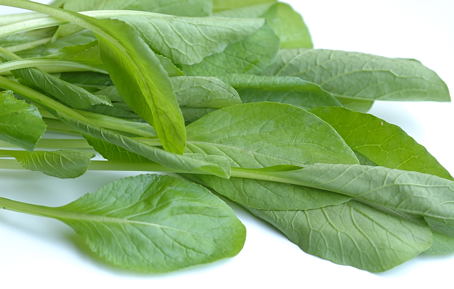
Baby Sarson (Baby Mustard Greens)
Baby Sarson (Baby Mustard Greens ~ Japanese Variety)

“Mustard greens originated in the Himalayan region of India and have been grown and consumed for more than 5,000 years. Mustard greens are a notable vegetable in many different cuisines, ranging from Chinese to Southern American. Like turnip greens, they may have become an integral part of Southern cuisine during the times of slavery, serving as a substitute for the greens that were an essential part of Western African foodways. While India, Nepal, China and Japan are among the leading producers of mustard greens, a significant amount of mustard greens are grown in the United States as well.”

– Says the WHFoods, a website which provides unbiased scientific information on nutrient-rich World’s Healthiest Foods. If you think history of this green leafy vegetable is impressive, check out the detailed nutritional information listed. It has antioxidants like Vitamins A, C, E to mineral – Magnesium, that would help to deal with lung problems (asthma) etc, – almost everything that a health(label) conscious person desires in a vegetable. Not only that mustard seeds (aavaalu) that we use regularly in our tadka and mustard oil comes from this vegetable.

When it comes to cooking mustard greens, the famous Punjabi’s ‘Sarson da Saag’, is THE recipe. Mustard Greens (Sarson Patta in Hindi), spinach and paneer along with traditional Indian seasoning are all cooked together. Like Punjabis, the end result is attractive and vibrant – in a nutshell, wholesome food experience. Give it a try!
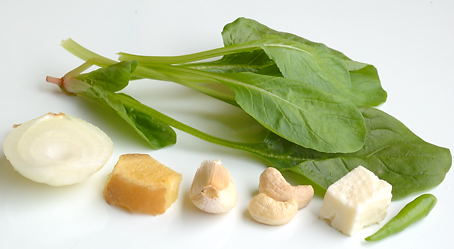

Fresh Baby Mustard Greens, Spinach, Onion, Ginger, Garlic, Cashews, Paneer, Green Chilli

Recipe:

1 bunch fresh, baby Sarson (mustard greens)- chopped
1 bunch fresh spinach – chopped
10 green chillies – small Indian variety
1 small onion – finely chopped
1 tsp of ginger-garlic paste
1 tsp of cccc powder (cumin-coriander-clove-cinnamon) or garam masala
15 cashews – roasted and powdered
15 paneer cubes – grilled or pan-fried to light gold
Limejuice to taste or 2 tablespoons
Turmeric and salt to taste or ½ tsp each

1. In a big skillet, heat a teaspoon of ghee. Add and saute the sarson, spinach and green chillies. Within 2 to 3 minutes, the leaves start to wilt and come together. Turn off the heat and remove them to a plate. Let cool and then take them in a blender or food processor. Grind to coarse paste by adding a pinch of salt.

2. In the same skillet, add and heat a teaspoon of ghee. Add and saute onions to gold color. Add and fry ginger-garlic paste for few seconds. Add pureed sarson-spinach-green chilli and half cup of water. Stir in cashew powder, garam masala, turmeric and salt. Mix thoroughly. Cover and simmer for about 10 minutes on medium-low heat. Before turning off the heat, add paneer cubes and sprinkle in limejuice.

Serve hot. Tastes great with rice and roti or chapatis.
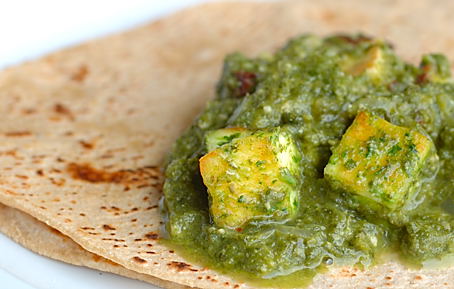
Sarson Da Saag with Chapatis
Sarson da Saag with Chapatis.

I purchased these fresh, baby mustard greens from an Asian grocery shop (Uwajimaya).
Recipe adapted from: Basant. I have added cashews to bring some nutty sweetness to the curry.
Posted by Indira©Copyrighted in Cashews,Paneer,Sarson (Mustard Greens),Spinach (Monday November 6, 2006 at 4:29 pm- permalink)
Comments (32)

The New Home of Mahanandi: www.themahanandi.org

Mustard Greens (Sarson Patta or Sarshapa)

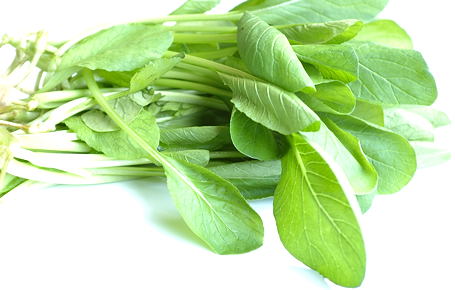
Baby Mustard Greens
Young, tender Sarson Patta or Mustard Greens ~ For this Week’s Indian Kitchen

Posted by Indira©Copyrighted in Indian Ingredients,Indian Kitchen,Sarson (Mustard Greens) (Sunday November 5, 2006 at 5:13 pm- permalink)
Comments (14)

The New Home of Mahanandi: www.themahanandi.org

Weekend This and That

Deepavali Celebrations from Panjim, Goa, India:

Hair-on-fire to Klingon to Genghiz Khandifferent avatars of Narakasura

Food Blogging World ~ Newbies and News

“Happiness isn’t good enough for me! I demand euphoria! That’s the difference between me and the rest of the world!”
– Vidya of Foodie Confidential from Tsuruoka, Yamagata, Japan.

“One of the big lessons, I have learned from my mum is not to have the ?it will do? attitude towards a given recipe. Don?t bother cooking a given dish if you don?t have the right ingredients.”
Dilip of Garam Masala from London, UK.

Nursing student, mother, food blogger and she has a gorgeous kitchen
– from Newfoundland, Canada, Trupti of The Spice Who Loved Me

Ghutti coffee and more from Palo Alto, California – Alison of Full Tummy.

Kay is back!

Voting is on! Go vote and have fun!

Posted by Indira©Copyrighted in Zen (Personal) (Saturday November 4, 2006 at 8:26 pm- permalink)
Comments (8)

The New Home of Mahanandi: www.themahanandi.org

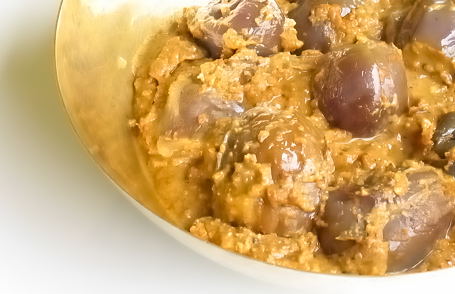
Baby Brinjals in Masala Sauce (Gutti Vankaya)

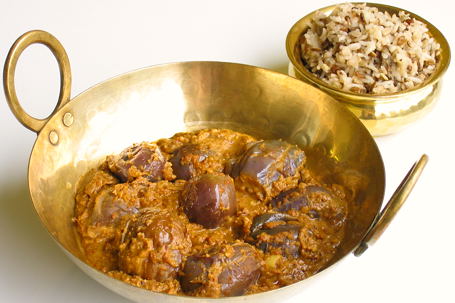
Gutti Vankaya Kura (Stuffed Brinjal Curry or Baby Brinjals in Masala Sauce)

Once upon a time, like many of us in present time, a housewife was struggling with the question, “what’s for lunch?”

Adding to the stress, it was almost month end, everything in her kitchen cupboard needed refilled. To do that she had to wait until the salary comes home. What she had was few young brinjals from her backyard garden. Even the pleasant pale purple color of brinjals couldn’t lift her spirits up. Nonchalantly she plucked the brinjals and dragged herself into the kitchen to prepare something. She opened the cupboard, added everything that was available there to the skillet to roast. Wonderful aroma from roasting lifted her spirits a little. She had to powder them so pounded away her frustrations. In exercise induced endorphin daze, she thought of a novel way to cook brinjals and made a plus shaped cut in brinjals. In a big skillet, added the brinjals along with powdered ingredients and a glass of water. Covered the vessel and let it simmer while she went to freshen up. When she came back what she had in the pot was a delicious stew of brinjals. So fragrant and so pretty to look at. Her face glowed like a warm sapphire and at last she smiled at her ingenuity. Thus, a new recipe was born! Saving housewives everywhere, whenever they are low in spirits or things in kitchen cupboards.

I am sure this must be the story behind the ever-popular stuffed brinjal curry of India. Like the designers to dress stars at Oscar night, all the famous spices and ingredients in Indian kitchen come out, but here to dress the already gorgeous shiny starlets – the fresh, young brinjals. Needless to say the recipe rocks!


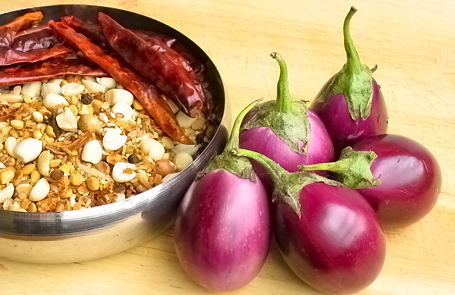
Ingredients for Gutti Vankaya Kura

Recipe:

Roast or toast in an iron skillet:
Needed: quarter cup, tablespoon, teaspoon, ¼ teaspoon and a hot iron skillet. One by one or all together, however it’s convenient for you, roast the following items listed below. Take care not to black or burn them. Ingredients quantity is for 12 brinjals.


– Quarter cup each of:
Chana dal, urad dal, sesame seeds, grated coconut and peanuts
– Tablespoon each of:
Coriander seeds and cumin
– Quarter teaspoon each of:
Cloves, cinnamon, black peppercorn and fenugreek(methi) seeds
– 15 dried red chillies (for 12 brinjals)

Once they are cool enough to touch, take them all in a mixer. Add a tablespoon each of – jaggery, tamarind juice and a teaspoon of salt. Blend them to smooth consistency.

Baby Brinjals:
12 young fresh looking brinjals. Make two cuts in each brinjal, one horizontal and one vertical Like plus (+) shape. Keep one end intact. Check this photo for reference.
(The brinjals I’ve used for this recipe are young and tender, too small to stuff. So I directly added them to the skillet after making a plus shaped cut. If these were somewhat medium size, I’d have stuffed them like I did in this method.)

Cooking:
Heat a tablespoon of oil in a big skillet. Do the popu (add and toast few curry leaves and a teaspoon each of cumin and mustard seeds).

Add the cut brinjals to the skillet and also the masala powder you have grinded earlier. Add about a glass of water. Stir in turmeric and salt-½ tsp of each. Cover and cook on medium-low heat for about 20 to 30 minutes, stirring in-between. When brinjals are cooked to tender and masala sauce thickens up a bit – time to turn off the heat. Let the curry sit on stove for another 10 minutes like that, giving more time for the flavors to mingle well.

Serve warm with rice or roti.

This recipe is my mother-in-law’s. Even without ginger-garlic and tomatoes, it tastes great and she usually prepares this curry with pulagam (rice+split moong dal+salt) or jonna rotte (sorghum roti) combination.

Gutti Vankaya Kura mariyu pulagam (Stuffed Brinjal Curry with Split Moong dal Rice)

Stuffed Brinjal:
Gutti Vankaya Kura (Stuffed Brinjal Curry I)
Nune Vankaya kura (Stuffed Brinjal Curry II)

Posted by Indira©Copyrighted in Amma & Authentic Andhra,Indian Vegetables,Vankaya (Brinjal) (Friday November 3, 2006 at 3:27 pm- permalink)
Comments (30)

The New Home of Mahanandi: www.themahanandi.org

Ridgegourd~Moongdal (Beerakaya Pesara Pappu)

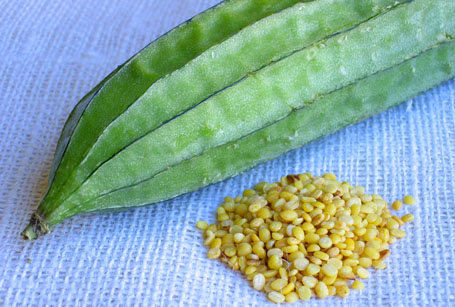
Precious things in nature often have some protective mechanisms to guard themselves. A pineapple or a rose, by the looks or touch, they strongly give signals to not to touch. But remove those sharp things and you know there will be a sensory explosion awaiting you. Same thing with the vegetable, ‘ridge gourd’ (beerakaya, turai). Just at the first look a person with any veg sense or nature sense would immediately know that this vegetable has something special going on.

Nature has showed a special interest on this veggie. Unlike any other gourds, ridge gourd has some sharp vertical ridges along its body. The younger the vegetable the sharper the ridges are. Once you peel the ridges and cut it open, sweet tender taste awaits you. Mature, old ones have ridges like far end of knife, dulled and raised – signaling that they are not good for consumption. Like dried rose petal potpourri, they are also destined for bathrooms as loofas. But young ones, they taste tenderly sweet and here in this traditional Bharath recipe they are paired with moong dal. Lightly roasted moong dal and tender ridge gourd cooked together with green chillies. And tadka is added at the end to bring life to the dish. Easy comfort food that tastes good, particularly on a cold day like today.


Ridge Gourd and Roasted Yellow Moong Dal

Recipe:

Yellow Moong dal: Roast 1 cup of yellow moong dal in an iron skillet to light golden-brown color. I prefer moong dal always roasted, this is a habit I got from my mother. It takes few minutes to do the roasting but I do think they taste so much better as a result.

Ride gourd and green chillies: Peel the ridges of one medium sized young ridge gourd and scrape the skin lightly. Cut the vegetable to small pieces. Comes about 3 cups. Also finely chop 8 green chillies.

Cook: Take roasted moong dal, ridge gourd pieces and green chillies. Add a tablespoon of tamarind juice, half teaspoon of turmeric and one glass of water. Pressure-cook or cook covered until they are tender. Remove the lid, add about half teaspoon of salt and mash the dal to smooth consistency.

Do the popu or tadka: Heat a teaspoon of peanut oil in a vessel. Add and toast few curry leaves, a tablespoon of minced garlic and one teaspoon of cumin and mustard seeds, in that order. When seeds start to dance, immediately add the mashed dal to the popu.

Serve warm. Tastes good with rice and with chapatis.


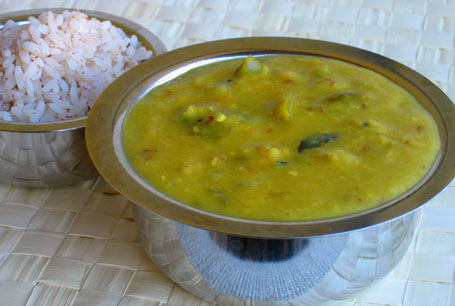
Ridge Gourd~Moong Dal with Rosematta Rice

Turai curry with fresh dill – recipe

Posted by Indira©Copyrighted in Beera kaaya(Ridge Gourd),Indian Vegetables,Moong Dal (Washed) (Thursday November 2, 2006 at 2:34 pm- permalink)
Comments (26)

The New Home of Mahanandi: www.themahanandi.org

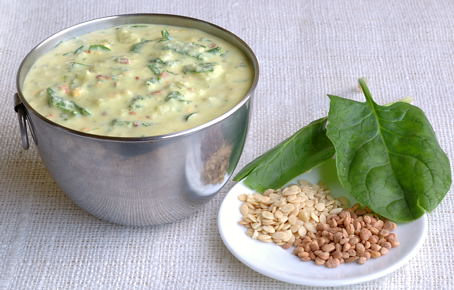
Ponganalu with Spinach and Sara Pappu

Somehow, I’ve been missing participating in Nandita’s Weekend Breakfast Blogging, an event celebrating the much neglected, overnight fasting breakers – the morning mini meals (breakfast/tiffin). “A twist in the plate” is the theme for this month’s WBB. Taking an old recipe and adding our own touch and improving it a little bit is the idea behind the theme.

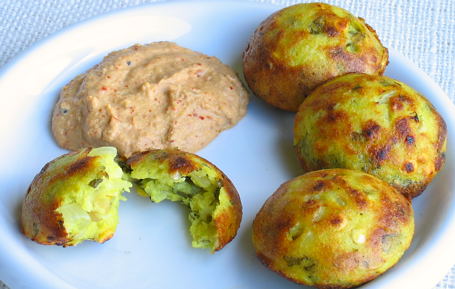
Ponganalu, the classic Rayalaseema breakfast, the recipe is fine on its own. Leftover dosa batter, onions, chana dal, green chillies and cilantro, mixed and cooked in a special ponganalu pan. The result is small goblets or space saucer shaped rounds – fun and tasty on their own. My twist to this old classic is adding a bunch of finely chopped spinach and few tablespoons of sara pappu (chironji) and watermelon seeds. Mixed with dosa batter and cooked to crispy, crunchy perfection in ponganalu pan. Less batter, more ingredients and better ponganalu, that’s papa johns pizza, sorry:), that’s my “twist in the plate” ponganalu and my contribution to Weekend Breakfast Blogging.


Spinach, Sara Pappu and Watermelon Seeds in Ponganala Batter


Cooking Spinach Ponganalu in a Special Ponganala Skillet


Spinach Ponganalu with Peanut Chutney ~ For Nandita’s WBB-“Twist in The Plate” Event

Detailed Recipe and images of traditional Ponganalu – Here
To purchase a skillet similar to Ponganala Pennam – Click Here

Posted by Indira©Copyrighted in Amma & Authentic Andhra,Biyyamu (Rice),Charoli (Sara Pappu),Spinach,Urad Dal (Washed) (Tuesday October 31, 2006 at 3:13 pm- permalink)
Comments (33)

The New Home of Mahanandi: www.themahanandi.org

Rosematta rice and dal

Rosematta Rice ~ Traditional Rice of India

The first time I heard about rosematta rice is at InjiPennu’s Ginger and Mango’s blog. This is the reason why food blogs rock. They can highlight a completely regional ingredient and make it accessible to those of us interested.

After reading her post, I thought I should try this beautiful pinkish grain at least once in my lifetime and fortunately I was able to purchase the rice at Indian grocery shops here in Seattle. Before blogging I wanted to know more about this rice. Sadly, there is not that much out there on the web. I couldn’t find even a single article or a photo (except for InjiPennus’s article) written on this traditional rice of India. Instead, what I found was umpteen articles on how mughals influenced Indian cooking etc, you know the same old, tiring typical things, authors of Indian cuisine focus on. Learning history is a good thing I agree but I do wish there were more articles on foods like rosematta rice that are unique and traditional to India. If there is anyone out there who knows the detailed history and irrigating areas of this rice, wants to share, it’d be my pleasure to publish your article on Mahanandi.

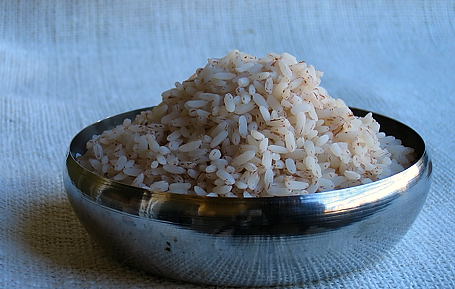
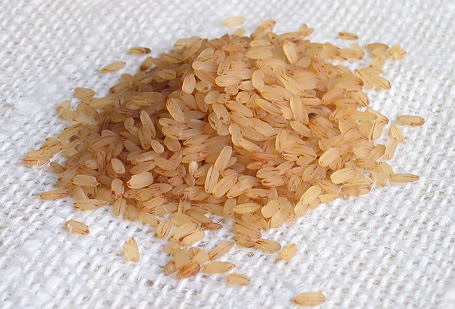
Rosematta rice also known as Palakkadan matta rice or Kerala Red Rice
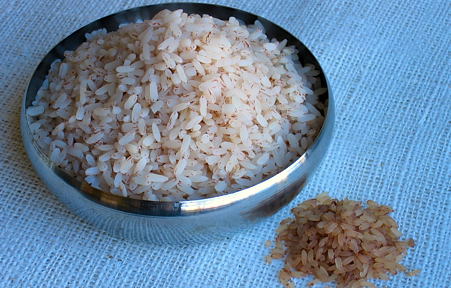
Rosematta Rice – Raw and Cooked

Well, here is my experience of rosematta rice (also known as Palakkadan matta rice or Kerala red rice) – The raw grain is short and plump. It has brownish red, more like watered down terracotta color. There is 3 to 5 thick dark terracotta colored vertical streaks on the grain. I am guessing this is the outer bran of the grain, which will be lost if they polish this rice.

When it comes to preparation, I have prepared it little bit differently from my regular rice (Sona Masuri). First I took and let the water boil in a big pot and then added the rosematta rice to this boiling water. Partially covered the vessel with a lid and cooked the rice until the rice is soft and water evaporated. The measurements I used were 3 cups of water for 1 cup of rosematta rice. The time it took to prepare was about 20 minutes. Result is superior quality rice in a pale rose hue. I would describe its taste as earthy and gutsy, more pronounced than the regular white rice and with a nutty overtone. I loved the ruchi of it mixed with the dal.

Many thanks to dear InjiPennu for introducing this rice to me. I am glad that I tried and planning to prepare it atleast once a week from now on at my home. Brown rice doesn’t have to be boring, you can surely say that with this terracotta colored, traditional Indian rice.


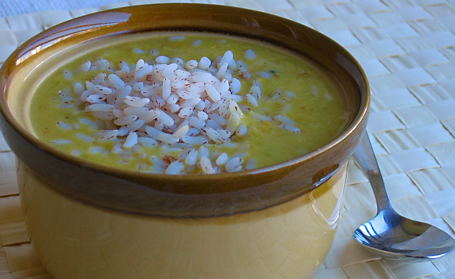
Rosematta Rice with Moongdal Rasam

Posted by Indira©Copyrighted in Biyyamu (Rice),Rosematta Rice (Monday October 30, 2006 at 2:24 pm- permalink)
Comments (55)

The New Home of Mahanandi: www.themahanandi.org

Rosematta Rice


‘Rosematta’ Rice From kerala and Tamilnadu
An Ancient Grain of India ~ For This Week’s “Indian Kitchen”

Purchased from Seattle Indian grocery shops
How to cook rose matta rice – recipe

Posted by Indira©Copyrighted in Biyyamu (Rice),Indian Ingredients,Indian Kitchen,Rosematta Rice (Sunday October 29, 2006 at 2:42 pm- permalink)
Comments (14)

The New Home of Mahanandi: www.themahanandi.org

Weekend Kittaya Blogging

Kittaya
Intense Kittaya

Happenings Around Blogosphere

My Dhaba’s Virtual Cooking Competition:
Theme: Festival Food – Any Cuisine
Prize Money: $100

Wanted: Hopefully Alive

Reading recommendations from a mother who is a children’s literature enthusiast – “Saffron Tree” from Desimom

Posted by Indira©Copyrighted in Kittaya,Zen (Personal) (Saturday October 28, 2006 at 7:04 pm- permalink)
Comments (7)

The New Home of Mahanandi: www.themahanandi.org

Paneer Pad Thai with Bok Choy


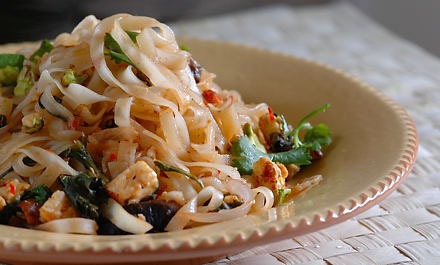
Paneer Pad Thai with Pistachios and Bok Choy

This is an eggless version of pad thai and prepared in response to this comment. Dear Terri, this recipe is for you.

Paneer is prepared in bhurji style and has been added to rice noodles. When all done, it almost looks like fried eggs of padthai but with paneer taste and smell. I have also added pistachios in place of peanuts and lots of bok choy, a green leafy vegetable of Chinese. I am able to purchase all the ingredients listed for this recipe at affordable prices, that means at the prices I am willing to spend:) here in Seattle, and because of that I could experiment however I like.

So here it is, with paneer, pistachios and bok choy ~ My version of pad thai.


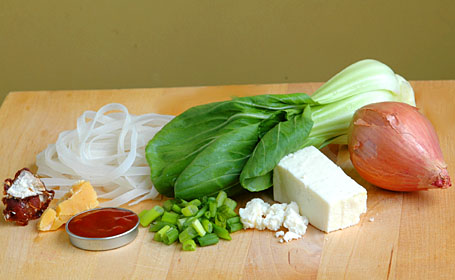
Ingredients for Paneer Pad Thai

Recipe:
(for two, for one meal)

Flat rice noodles (two bundles)
(Soaked in hot water for about 15 minutes, drained just before the start of stir-fry.)
Paneer – cubed and crumbled – about 1 cup
Baby Bok Choy – 8 bunches – finely chopped
Pistachios – ½ cup
Shallot (Indian onion) – 1, and green onions – 1 bunch, finely chopped
Fresh bean sprouts – 2 cups
Fresh Cilantro – few sprigs, finely chopped
Soy Sauce – 1 tablespoon
Padthai Sauce:
10 fresh red chillies (pandu mirapa kayalu)
1 T of jaggery
1 T of tamarind juice
½ tsp of salt
Take them all in blender, add half cup of water, grind them to smooth paste

Keep all the ingredients ready by the counter.

Place a big skillet or wok on stovetop. On high heat, add and heat about 2 teaspoons of peanut oil.

When it is hot, one by one add the ingredients listed below in that order.
shallots, green onions, crumbled paneer, bok choy, bean sprouts, pistachios, soy sauce and pad thai sauce. Do the quick stir-fry and add the rice noodles. Sprinkle in a quarter teaspoon of salt, mix and saut? briefly and serve with some limejuice sprinkled.

That’s it, a very quick meal to prepare and to have. And this time, I applied the traditional Thai advice and soaked the rice noodles in hot water instead of cooking them in boiling water. They tasted much better this way.

Recipe adopted from Thai food and travel.com

Posted by Indira©Copyrighted in Bok Choy,Paneer,Pistachios,Rice Noodles (Friday October 27, 2006 at 5:53 pm- permalink)
Comments (22)

The New Home of Mahanandi: www.themahanandi.org

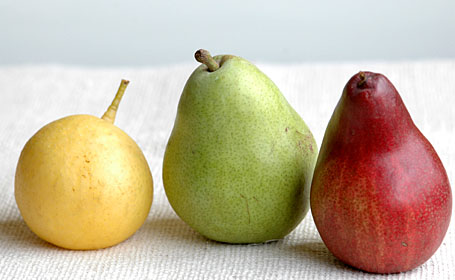
Pears of Autumn

Pears - Yellow, Green and Red

Pears of different kinds, each variety 99 cents a pound.

At Uwajimaya, a local family run Asian grocery shop, pears of all kinds are in. Green, red and yellow, like the breathtaking autumn colors, crisply fresh and tempting, I had to pick a pound of each variety.

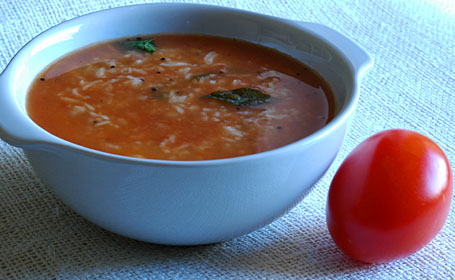
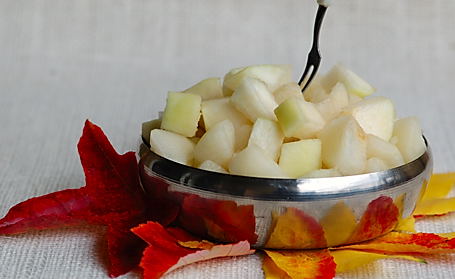
That’s lot of fruits so I have prepared a fruit salad this afternoon. Peeled the fruits and cut them to cubes, that’s it. No dressing and nothing. Unambitious I was in my preparation. Even without the extras, the fruits with their aromatic sweetness filled us to satisfaction. Simple fruit salad and a big bowl of tomato chaaru with some leftover rice mixed in – misty steamy rasam and mellow fruitfulness to celebrate the autumn season.


Tomato Rasam with Rice and Pears Fruit Bowl ~ Celebrating the Autumn Colors

Posted by Indira©Copyrighted in Fruits (Thursday October 26, 2006 at 1:38 pm- permalink)
Comments (21)

The New Home of Mahanandi: www.themahanandi.org

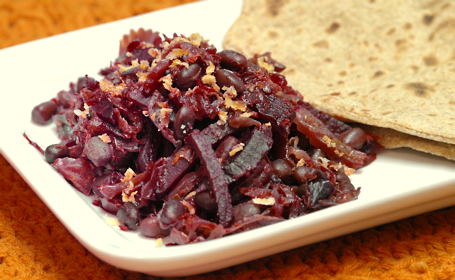
Red Cabbage, Beetroot and Redbeans Curry

Beetroot is one vegetable that I am trying to incorporate into my diet more often. I need iron and beetroot is famous for its folate and iron content, with added bonus of some natural sugar.

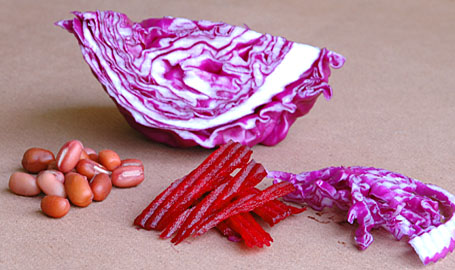
Along with steamed and plain stir-fry, one other way I prepare a beetroot curry is by cooking in combination of red cabbage and red beans. Beetroot stains everything it touches and perfect to cook with red cabbage. When it comes to red cabbage, the vegetable may sound fancy but it is almost similar to regular cabbage in taste and texture. When red cabbage cut to half, the color is more purple than red, sometimes solid, sometimes combined with delicate streaks of white. Looks beautiful but it can’t escape the typical cabbage smell and taste. Together with, beetroot and red beans, this ruby red curry is a good, decent one to have on a rainy day with gray skies like the one we are having today.


Soaked Red Beans (Adzuki), Grated Beetroot, Shredded Red Cabbage

Recipe:

1 red cabbage – Shredded using a mandoline
4 small beetroots – peeled and finely chopped lengthwise
½ cup of red beans (chori, Adzuki)
soaked in warm water for about 3 hours to rehydrate and drained.
1 red onion – finely sliced lengthwise
6 dried red chillies+2 garlic+½ tsp of salt – grinded to fine paste
½ tsp of turmeric and salt (or to taste)
Popu or tadka ingredients along with 1 tsp of peanut oil

In a big skillet, heat peanut oil. Do the popu or tadka (toast curry leaves, cumin and mustard seeds). Add and saute onions and red beans for about five minutes.

Add the beetroot pieces. Sprinkle two tablespoon of water. Cover the skillet, and cook beetroot and red beans until they reach the tenderness you desire. At this stage, add the shredded red cabbage. Because cabbage cooks fast, we add it only after beetroots are cooked properly.

Add the red chilli-garlic paste that we have prepared along with turmeric and salt. Mix thoroughly. Cover and cook for another five minutes.

Serve hot with chapatis or tortillas with a cup of yogurt on the side.
(I have also added few teaspoons of toasted fresh coconut (Deepavali Puja) to the curry at the end.)


Red Cabbage~Beetroot and Red Beans Curry with Chapatis ~ Our Meal Today

Posted by Indira©Copyrighted in Beetroot,Cabbage,Red Beans (Chori) (Tuesday October 24, 2006 at 6:42 pm- permalink)
Comments (40)

The New Home of Mahanandi: www.themahanandi.org

Paruppu Usli with Gawar Beans

As winter approaches, the weather is turning to cool but the political scene here in Seattle is warming up to hot.

Midterm elections, where the locals would elect members to both Senate and House of Congress are in November and the candidates of both parties are in full campaign mode. It’s not only war of words and but this is also a gender war. On one side, that is on Democratic Party side, two pretty ladies. One is who looks like a confident, capable person for the Senate and for the House, the candidate name is Darcy Burner. She looks like someone from a stupor of mind numbing desk job one day got real mad at the current state of affairs and decided to run for the office. I really like her; she looks very professional, intelligent face and cute nerdy haircut. On the other side for Republican Party, two guys. For Senate, a guy who looks like a used car sales man trying to make a quick lemony sale, that kind of cunning personality and for the House – this guy looks like someone who took steroids in teenage years, off-putting, muscle/no brain kind of type.

There is an ad war going on between these candidates on local TV programs including cable. From what I have noticed so far, Democratic Party ads usually mention what they are going to do for the people of Washington state and country. Where as Republican Party ads are mostly about how “illegals” and Mexicans are going to take away the money, benefits from US or bad people are coming to our shores, boo… be very afraid and hide in your closet always, but vote for us in November. Sickening to watch that kind of sick, hate crime inducing ads from this party. That’s what going on in Seattle airwaves currently, thought some of you politics buffs would like to know.

When it comes to my kitchen, what’s going on is, I have prepared Paruppu usli with some leftover gawar beans of last week. This is another way I like to prepare these beans and the recipe inspiration is from this paruppu usli curry I have prepared last year adapting Shammy’s recipe. Gawar beans (from party of vegetables) and chana dal (protein party) are steamed and then stir-fried with onions and seasoning. End result is a pleasant, nutty taste that would be great with rice and sambhar/rasam/majjiga pulusu combination.


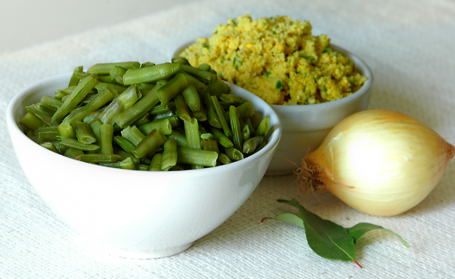
Steam-cooked Gawar Beans, Grinded Chana dal- Green Chilli Mixture, Onion and Curry Leaves

Recipe:

Gawar Beans (Mattikayalu): Washed, ends stringed and cut into one-inch pieces. Steam-cooked or blanched for few minutes to tender – about 2 cups

Chana dal: 1 cup, soaked in 2 cups of water (to soften the dal) for about 2 hours. Water drained and the chana dal is grinded to coarse mixture along with 10 green chillies, one-inch fresh ginger and one teaspoon of salt in a food processor.

Onion: Big one, finely chopped to small pieces

Popu or tadka ingredients along with two teaspoons of peanut oil


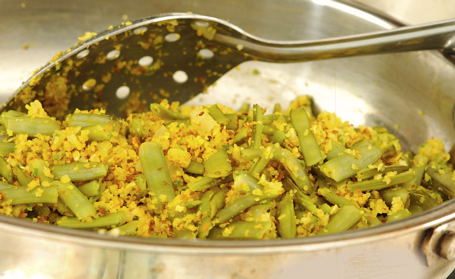
Sauteing the Curry

In a big, wide skillet, heat peanut oil. Do the popu or tadka (toasting curry leaves, dried red chilli pieces, cumin and mustard seeds – in that order).

To this tadka, add and saute onions and also the grinded chana dal-chilli mixture. On medium heat, constantly stirring, saute the mixture for about 10 to 15 minutes, until the raw smell of chana dal goes.

At this stage, add the steam-cooked gawar beans. Add turmeric and salt to taste also a pinch of asafoetida. Mix and cook by covering the pan for about another 10 minutes, occasionally stirring.

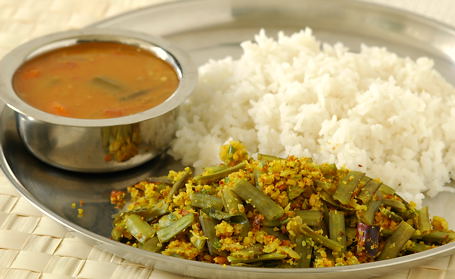
This curry tastes great when served hot and I have been preparing it as a side dish to rice and sambhar. Good combination.


Paruppu Usli with Gawar Beans, Okra Sambhar and Rice

Posted by Indira©Copyrighted in Chana Dal,Indian Vegetables,Matti Kaayalu(clusterbeans) (Monday October 23, 2006 at 11:48 am- permalink)
Comments (24)

The New Home of Mahanandi: www.themahanandi.org

Weekend This & That ~ About “Mahanandi Selections”

I have been thinking of finding someways to support and pay for the expenses of my blog hosting lately. The cost of hosting is also increasing with the traffic that I get to this site. Opening a storefront using Amazon.com seemed like a reasonable opportunity to go with, without cluttering my blog space with generic google ads. Hence I started “Mahanandi Selections”.

Amazon.com would pay me a small commission for each purchase made through this store. If you have an account with Amazon and buying from there, I would like to ask you to go through my store to support Mahanandi. I’d only show limited selection (nine, 54 items) on my storefront, but you can also purchase anything available at Amazon.com through “Mahanandi Selections” either by using search button or sub categories.

I greatly appreciate your support. Thanks!


My Amazon Store

Mahanandi Selections: My Amazon E Store. If you have an account already at Amazon, search and shop through this site to support Mahanandi. Thank you!
Search, Shop and Support: Mahanandi Selections

Posted by Indira©Copyrighted in Mahanandi Selections,Zen (Personal) (Saturday October 21, 2006 at 5:08 pm- permalink)
Comments (20)

The New Home of Mahanandi: www.themahanandi.org

Shubha Deepavali!

Deepavali Greetings to family, friends, fellow bloggers and readers!

Deepavali Subhakankshalu
photo by Singari Vijay

Snapshots of Deepavali Celebrations:

Festive Mood ~ from Panjim, Goa, India.

Deepavali Decorations in Singapore

Posted by Indira©Copyrighted in Zen (Personal) (Friday October 20, 2006 at 9:55 pm- permalink)
Comments (29)

The New Home of Mahanandi: www.themahanandi.org

« Next PagePrevious Page »