Mahanandi

Living in Consciousness ~ Indi(r)a’s Food and Garden Weblog

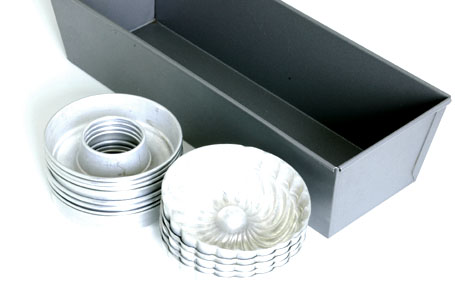
Few Baking Pans and A Mamiya

July 4th Weekend Shopping:

We have been looking for these things for a while and this weekend got lucky. Vijay got his camera from an online store and I got my cute baking pans at local flea market, both at great prices. Here they are – baking pans and a Mamiya.

Posted by Indira©Copyrighted in Zen (Personal) (Monday July 3, 2006 at 4:40 pm- permalink)
Comments (16)

The New Home of Mahanandi: www.themahanandi.org

Bhakthi ~ Bhukthi (SV Temple and Temple Food)


Sri Venkateswara Temple, Pittsburgh and Swarna Ratham

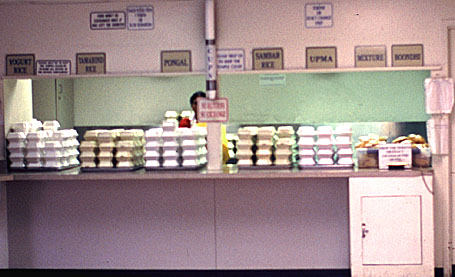
Temple food is the best way to enjoy traditional Indian food and no restaurant can match the taste and the quality. In Pittsburgh, the SV Temple canteen is open during temple hours and has a small kitchen and big dining hall to the side. The food is freshly prepared daily by the temple chef. The standard items you would find are – pulihora, yogurt rice, sambar rice, upma, pongal, mixture: sweet&hot varieties and also pickles. There is also a machine, where you can make your own tea and coffee.

The canteen has a separate entrance and open to all. Everything is priced very reasonable ($1.50, a box). My favorites are pongal, upma and mixture and I always buy them whenever I visit temple. Because of recent increase in number of people visiting this temple, temple management is fund-raising to build a more modern and big kitchen and also planning to include more items to serve.

Summer is the travel season here in US and temples are the most common tourist destinations to lot of folks like us. Our visits to temple are not only for divine darshan and also for homely dining. So thought I would share about SV Temple food. Bhakthi and bukthi fulfilled at the same time.


Temple Canteen


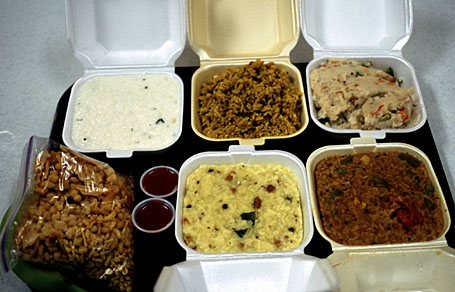
Yogurt Rice, Pulihora, Upma, Mixture, Pickle, Pongal and Sambar Rice

Bhakthi & Bhukthi – For Summer Travel:
Do you have a temple in your town/city? Join and share “Bhakthi and Bukthi” (divine and dine), experience, if you are interested, at your blogs. Thanks!
Temple Food: Ganesha Temple, Flushing, NY

Posted by Indira©Copyrighted in Bhakthi~Bhukthi,Zen (Personal) (Sunday July 2, 2006 at 4:24 pm- permalink)
Comments (33)

The New Home of Mahanandi: www.themahanandi.org

Sunnundalu(Urad Dal Laddu)~Indian Sweets 101

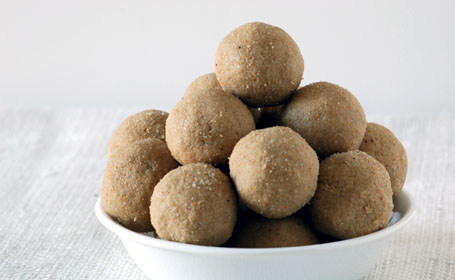
Sunniundalu

When Sailaja of Sailu’s Food selected dals to feature this month’s Jihva For Ingredients, I was ecstatic. The one and only ingredient that truly represents India is the variety of dals, in my opinion. There are rice states and there are wheat states, but common to all 28 states in India are dals. Each state has dazzling array of dal dishes both sweet and savory. Menus always include dal dishes for everyday, for celebrations and as well as for festivals. Even in a foreign land, our meals always would include dals in one way or other. It’s not stretching the truth, when I say dal dishes are the true heart and soul food of India.

By the way, if you haven’t been to Sailaja’s blog already, please go visit now. She blogs from calm, coastal city of Vishakapatnam by the Bay of Bengal, from my home state Andhra Pradesh. Her recipes are visual delight and pure gold. Whenever I visit her blog, I feel happy to see her creations and also feel nostalgic about what I am missing being away from home.

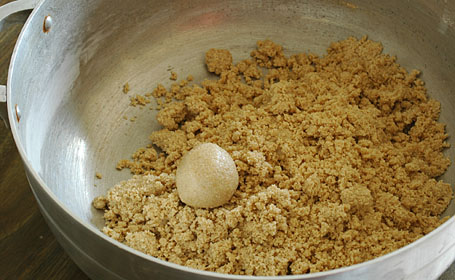
As an entry to JFI~Dals, I have prepared Sunniundalu, a traditional Andhra sweet. Roasted urad dal is ground with sugar into super fine sand like powder, mixed with pure ghee, and the mixture is shaped into round balls. This sweet is much beloved because of its unique taste and nutritional value. These are often prepared for special occasions like baby showers (srimantham) etc., I am so happy that I am able to recreate this favorite sweet of mine for JFI, an event created to celebrate the natural ingredients.

Recipe:
(for 15 medium-sized laddus)

3 cups of whole urad dal – roasted to golden color slowly and on low heat, continuously stirring in a big iron skillet
1½ cups of sugar
1 cup of melted ghee at room temperature
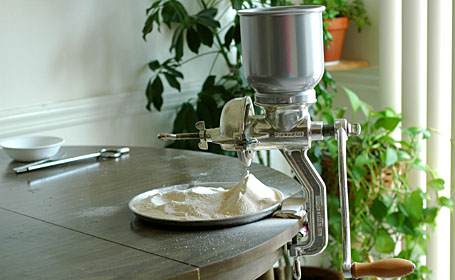
For grinding – esirayyi (grain mill) or Food processor
How this sweet tastes, 50 percent, depends on grinding method. Old world stone grain-grinder is the traditional method of choice. High powered, sharp bladed, food processor comes close. Whatever machine/method you use, the end product must be like fine sand.

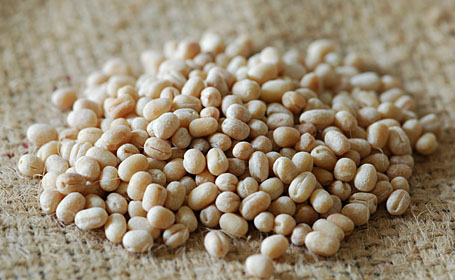
Whole urad dal - Roasted to light gold color
Whole urad dal – Roasted to light gold color

Grinding urad dal and sugar to superfine sand like powder using a grain mill

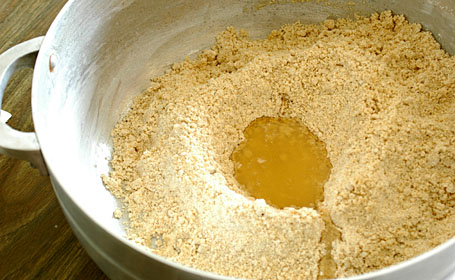
Adding melted ghee to the urad dal-sugar powder

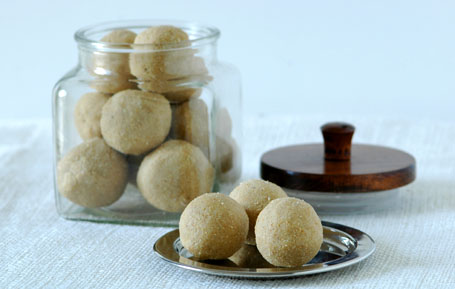
Urad dal-sugar powder and ghee mixture being made into laddus
Urad dal-sugar powder and ghee mixture being made into laddus.

Sunnundalu
Indian Sweets 101 ~ Sunnundalu for JFI-Dals

Many thanks to Sailaja for hosting this month’s Jihva For Ingredients. I am sure the roundup of this event is going to be spectacular. The entries that I have seen so far – Munthirikkotthu (Sweet Moong Dal Balls), Dal Podi Sushi Roll (Indianized Sushi roll), Mid-Eastern Mujadarah (rice-lentil dish) and Azuki paste ravioli in caramel sauce make this obvious. Have a fun and happy dal day on this July 4th weekend, everyone!

Notes:
Grain mill brand Name: PORKERT’s Kitchen Grinding Mill, Type 150
Purchased at a clearance sale from Tuesday Morning.
Sailu’s Sunnundalu – Link

Posted by Indira©Copyrighted in Amma & Authentic Andhra,Ghee,Indian Sweets 101,Jihva For Ingredients,Mitai,Sugar,Urad Dal (Washed) (Saturday July 1, 2006 at 12:02 am- permalink)
Comments (53)

The New Home of Mahanandi: www.themahanandi.org

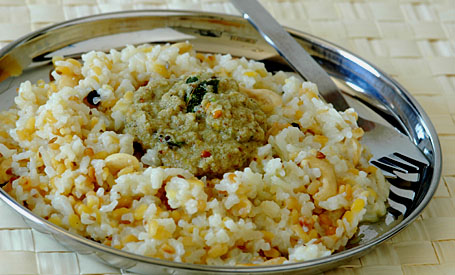
Pongal (Pongali)

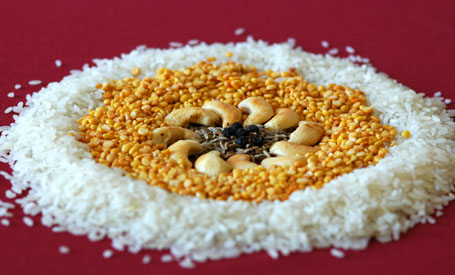
Rice, Roasted Yellow Moong Dal, Roasted Cashews, Cumin and Peppercorn
Sona Masuri Rice, Roasted Yellow Moong Dal, Roasted Cashews, Cumin and Peppercorn

Some foods are simply divine, pongal belongs to that category. There isn’t anything quite like pongal! Creamy and luxurious rice dish that you get by cooking rice with toasted moong dal in little bit of ghee. Lots of water, sometimes milk is added and seasoned with cumin, black peppercorn and salt. The whole mix is cooked in a big pot until the rice and dal are soft. Roasted cashews are sprinkled at the end. This simple dish is so fragrant, the whole house will be filled with wonderful aroma. And the taste, I won’t gush but I will say this; it’s often prepared and offered to Gods in temples. Can we, mere mortals resist the pongal temptation? I don’t think so!

Pittsburgh’s Sri Venkateswara Temple serves the best pongal I have ever tasted out side India. At the temple’s kitchen, the chef prepares pongal in a big caldron following the traditional method. The secret is not only quality ingredients but also the method of cooking, no pressure-cookers there. I think that’s why temple pongal tastes so good. Since last year I have been preparing pongal in a big pot and stopped cooking it in pressure cooker. The difference in taste is tremendous and surprisingly the preparation is also easy.

Here is my recipe:
(for two)

1½ cup rice (preferably Sona Masuri)
1 cup yellow moong dal
2 tablespoon of ghee
1 tsp of cumin
½ tsp of black peppercorn
1 tsp of salt
½ cup of cashews
7 cups of water and
I also add 2 cups of milk (my preference and optional)
A big sturdy pot (Big sauce pan)


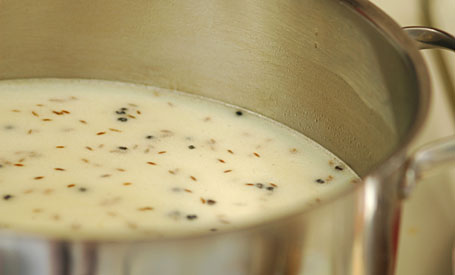
Pongal – Starting Point


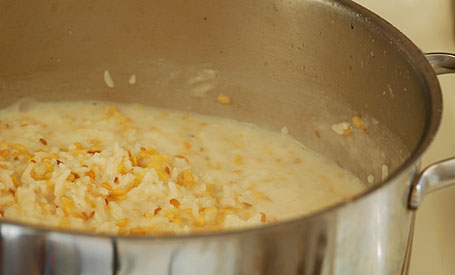
Pongal – After 15 minutes of cooking


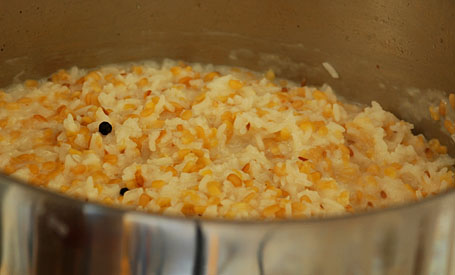
Pongal – at 20 minutes of cooking

1. Heat a teaspoon of ghee in an iron skillet on medium heat. Add and roast moong dal to golden color, constantly mixing. Take care not to black. Remove them to a plate. In the same skillet heat another teaspoon of ghee. Add and roast cashews to golden.

2. In a big sturdy pot, heat a tablespoon of ghee. Add and toast cumin and black peppercorn for few minutes. Stir in the toasted moong dal and rice. Mix them with ghee for few minutes. Pour water and milk and stir in salt. Cover the pot with lid and cook on high heat. Within 10 to 15 minutes, you will see the water gurgling and trying to lift the pot lid. At this stage, remove the lid. Mix the cooking mixture once and partially cover the pot with lid, leaving little bit of gap for water vapor to escape.

3. Within 5 minutes, you will see whole thing coming together. Rice-dal mixture will be doubled in volume. Each grain will be plumped but not broken open. Turn off the heat, and stir in roasted cashews. Close the lid fully and let the rice sit for about 10 minutes. At this stage, you can stir in more ghee if you want to and also add salt to suit your taste.

Rice-dal mixture absorbs the remaining water-milk liquid and becomes little bit tight. Pongal’s consistency can vary from something resembling a thick soup to a creamy porridge, but never like a tight hard ball. Resist the temptation to overcook and turn off heat early.

Usually we will have this pongal with chutney, potato kurma or with a cup of yogurt depending on the time of the day.


Pongal with Coconut Chutney ~ Traditional Indian breakfast
My first entry to JFI – Dal hosted by Sailu of Sailu’s Food and also to Paz’s For the Love of Rice


Along with cumin and black peppercorn, curry leaves are also added to the ghee. I didn’t have any curry leaves when I prepared this recipe so the omission.

Posted by Indira©Copyrighted in Amma & Authentic Andhra,Biyyamu (Rice),Cashews,Moong Dal (Washed),Sona Masuri Rice (Thursday June 29, 2006 at 1:46 pm- permalink)
Comments (41)

The New Home of Mahanandi: www.themahanandi.org

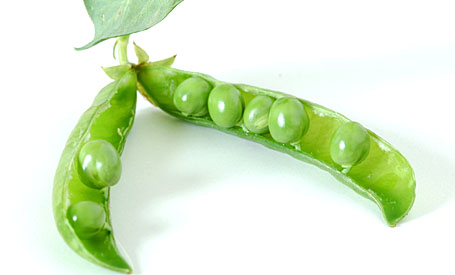
Fresh Peas of Summer & Guggullu

Fresh Green Peas of Summer

Though I enjoy vegetable shopping, I rarely get excited about it. Squeals and mile length smiles – I reserve them for rare finds like fresh plump pea pods. Late June is fresh pea time here in Ohio. Though peas are always found in frozen grocery section, I miss the taste and experience of shelling the fresh peas out of pods. This was one of those cherished practices from my Indian days.

We often hear that frozen veggies are same as fresh ones. Freshly shelled peas prove in a bite that it’s not true. Frozen peas do start out as fresh but all that freezing temperature and the ugly plastic wrap, bumping from one warehouse to another, finally when we open the packet – they would come out all shriveled up and lie there listless, looking at us ‘daya karo’ (merci). At that stage, I guess they are like us at the end of our lives – spent up but full of saccharine wisdom. In contrast the peas that are freshly shelled from fat pods are like cherubic faced babies, all plump and round, bouncing and rolling around. Full of energy and life force, tempting us to get hold of them. For that unforgettable sweet pea taste we would do just that.

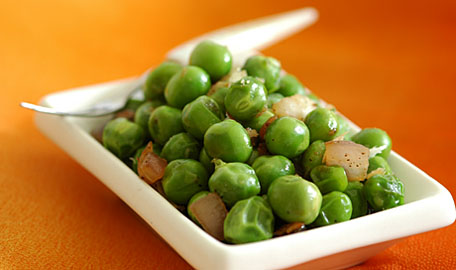
Here in US, the capital of all things frozen, finding these green gems fresh is almost like buying emerald Cabs. So precious, so few and so pricey! Last Sunday I got lucky and bought 3 pounds of fresh peas for about 5 dollars, from the local farmers market. After the indulgence, what left was a cup of shelled peas and I have prepared Guggullu with them. Just a simple 5-minute saut? of green peas with finely chopped red onions pieces. Touch of black pepper, salt and fresh grated coconut, they are done. Quick and great tasting traditional Indian recipe to enjoy fresh green peas.

Batani Guggullu (Fresh Peas Summer Salad)

Posted by Indira©Copyrighted in Amma & Authentic Andhra,Peas (Bataani) (Tuesday June 27, 2006 at 11:44 pm- permalink)
Comments (23)

The New Home of Mahanandi: www.themahanandi.org

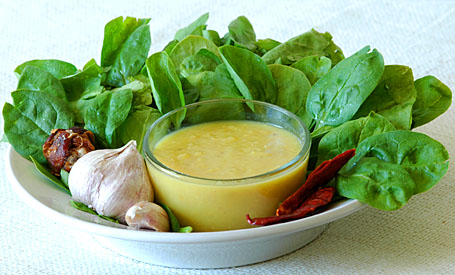
Spinach ~ Garlic Dal (Palakura~Vellulli Pappu)

Toor dal and spinach – no onions but lots of roasted garlic makes this dal unique. You may already know, spinach and garlic make a great combination. In this recipe, garlic is finely chopped and roasted to gold color. Cooking in this manner completely changes the character of the garlic. The garlicy smell disappears and what standouts is the mellow sweet and cashew nut like taste, giving the spinach dal a flavorful boost.

Preparation is 3-step process. (1) Cook toor dal until it falls apart (2) saute garlic and spinach (3) mix cooked toor dal and spinach-garlic. Add seasoning and simmer the whole combination for few minutes.

Recipe:

Pressure-Cook:
½ cup of toor dal and half teaspoon of turmeric in 1 cup of water
Cook the dal until it falls apart
Mash the dal to smooth paste using a wood masher and keep it aside

Meanwhile Prep Work:
1 bunch of spinach – cut into small pieces
1 small whole bulb of garlic – peel and chop garlic into small pieces
4 dried red chillies – cut them into small pieces
Soak marble-sized tamarind in half-cup of water for juice

Do the Tadka:
Heat a tablespoon of peanut oil in a big saucepan. Add and toast:
Dried red chilli pieces
Few pieces of curry leaves
One teaspoon of each – cumin and mustard seeds

Saute:
Stir in garlic. Saute to until golden. Take care not to burn.
Add the finely chopped spinach and saute until the leaves wilt and come together

Stir in and Simmer:
Stir in smoothly mashed toor dal to this sauteed spinach-garlic mixture
Add a tablespoon of tamarind juice, also half teaspoon each of – chilli powder and salt or to taste.
Stir to combine. If the dal is too tight, add about half cup of water.
Mix; close the lid and simmer for about 15 minutes on low heat.

Serve hot with ghee and rice for a great satisfying meal.

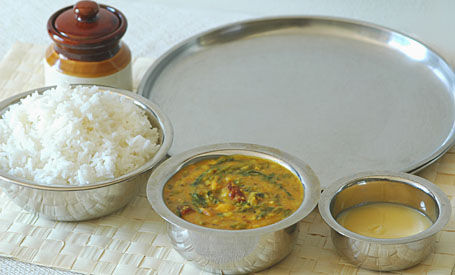
Spinach-Garlic Dal with Rice
Pickle, Rice, Spinach-Garlic Dal and Ghee – Meal Today

Recipe Source: Amma, Nandyala

Posted by Indira©Copyrighted in Amma & Authentic Andhra,Garlic (Vellulli),Spinach,Toor Dal (Monday June 26, 2006 at 1:34 pm- permalink)
Comments (41)

The New Home of Mahanandi: www.themahanandi.org

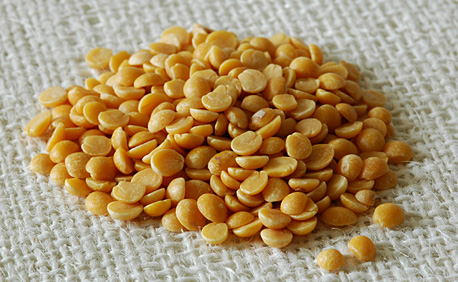
Toor Dal (Kandi Pappu)

Toor Dal (Kandi Pappu)
Dal For Life ~ Toor Dal (Kandi Pappu)
Preparing For JFI ~ Dal on July 1st and For This Week’s Indian Kitchen

Dal with lots of ghee, simple plain dal, dal in rasam and sambhar – homesick or tired of home, feeling indulgent or not feeling well – for every mood and for every occasion, Toor dal is ‘the dal’ for us at least 300 days out of 365 days of a year.

After rice, toor dal is the most important food ingredient we, Andhra log would have in our homes. Our parents, their parents, for all of us, the building bone is toor dal protein. We may move to different countries, talk or think in different language, one thing that’s going to be a constant in our lives foodwise is toor dal.

The light golden color, the way they cook easily, their taste – smooth and unique, the way they would fill us up without making us sweat and make us feel satisfied without being overwhelming. I love everything about toor dal. I confess I am a dal fiend and a toor dal addict. I am sure millions of other Bharat vaasi are also passionate about this dal just like me.

Posted by Indira©Copyrighted in Amma & Authentic Andhra,Indian Ingredients,Indian Kitchen,The Essentials,Toor Dal (Sunday June 25, 2006 at 6:42 pm- permalink)
Comments (9)

The New Home of Mahanandi: www.themahanandi.org

Weekend Kittaya Blogging

Kittaya - Photo By Vijay Singari
Hello There!

Posted by Indira©Copyrighted in Kittaya (Saturday June 24, 2006 at 4:26 pm- permalink)
Comments (9)

The New Home of Mahanandi: www.themahanandi.org

Soymilk Skin (Fresh Yuba) ~ Savory & Sweet


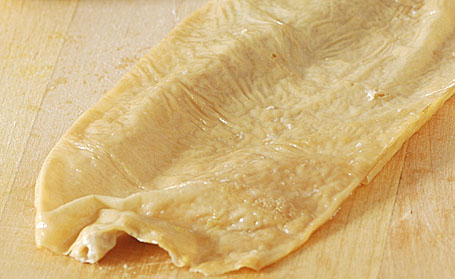
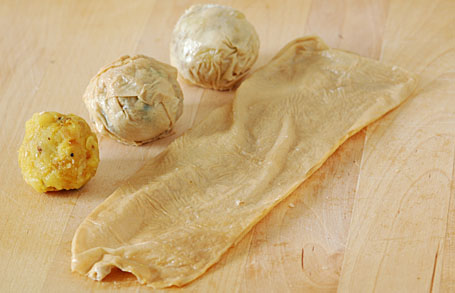
Fresh Soymilk Skin (Fresh Yuba, Uba, Bean Curd Skin, Fuzhu, Foo Pi)

Few months ago, after much hesitation I dared and prepared soy milk at home. The milk was alright, but what I liked most was the skins that would form while boiling soymilk. Do you remember from India, when you boil cows/buffalo’s milk, a thick layer of skin would form on top of boiled milk. You can just lift the layer and eat – Milk meegada or malai, do you remember the taste? Mildly sweet and irresistible because of limited amount. Same thing here with soymilk.

Soymilk skins are much thicker, almost like samosa/wonton wraps. They taste sweet and have a distinct soy smell. What I gathered from the web is that Japanese call this soymilk skin “Yuba” and they are an expensive delicacy. Famously and religiously prepared by Buddhist Monks and used in several Buddhist recipes for its protein richness.

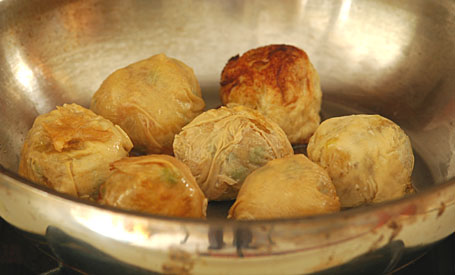
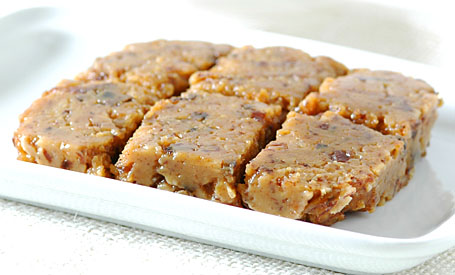
I wanted to try an Indianised yuba recipes and prepared two entries with soymilk skins. A savory and a sweet – Yuba:Potato Curry Rounds and Soymilk Halwa. As entries to IMBB+SHF ~ Soy, hosted by Reid of Ono Kine Grindz. Started the whole process first by preparing fresh soymilk. And then boiled the milk for about an hour. Constantly picking up the milk skins with a chopstick. I wrapped these milk skins around the potato curry and sauteed them for few minutes. With leftover soymilk skins and soymilk, I prepared halwa by adding sugar, finely chopped dates and freshly grated coconut. Simmered the whole thing until it came together like pala kova. Removed to a box and kept it in the freezer to make the halwa little bit firm.

Both the yuba-potato rounds and soymilk halwa tasted superb. Time consuming but worth my effort and I am glad that I tried this ancient classic Buddhist delicacy.

Here is the whole process in images. Enjoy!


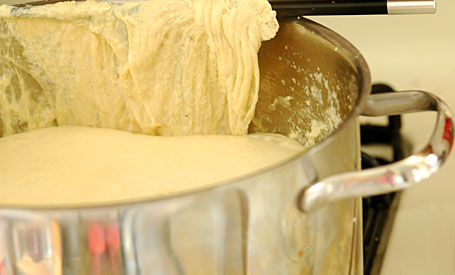
Boiling homemade soymilk to pickup soymilk skins (Yuba, Milk Meegada)


Wrapping Potato curry in soymilk skins (Yuba, Milk Meegada)


Sauteing the Soymilk skin (yuba) wrapped potato curry rounds on low heat


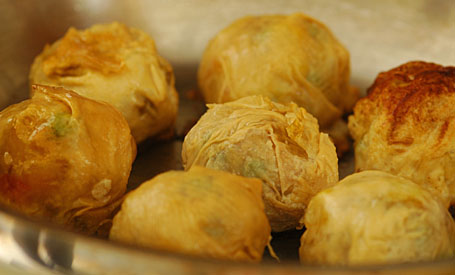
Golden colored yuba-potato curry rounds – in closeup


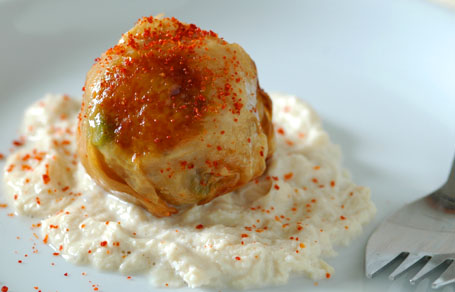
Yuba-Potato Curry Round in fresh soymilk skin (soy paala meegada) with red chilli-garlic powder as garnish


Soymilk Halwa with dates and fresh coconut


More about YubaHere and from Egullet
Yuba making – in images
Tags: +

Posted by Indira©Copyrighted in Dates (kharjuram),Potato,Soy (Tofu, Yuba),Sugar (Friday June 23, 2006 at 9:33 am- permalink)
Comments (49)

The New Home of Mahanandi: www.themahanandi.org

Red Bell Pepper Chutney

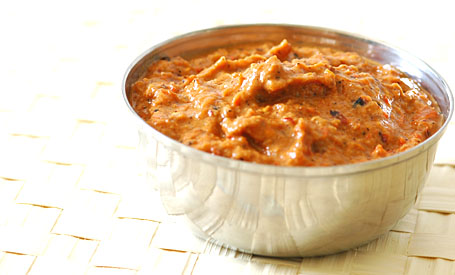
Red Bell Pepper Chutney

Of all different colored bell peppers, I like the red ones. Red bell peppers are matured green bell peppers and when bell pepper ages, not only the color but the flavor also changes. They become sweet, which is a surprise. Usually maturing into red signals the more fierce kind of flavor in vegetables, but here they mellow.

This favorite chutney of mine is prepared by roasting red bell peppers, onion and dried red chillies and by blending them including peanuts, jaggery and tamarind juice. The result is one of the flavorful and easiest Bharath-inspired chutnies you will ever try. Tastes superb with all the breakfast items, like idly, dosa, upma and also with rice, chapati or as a spread and dip for snack items.

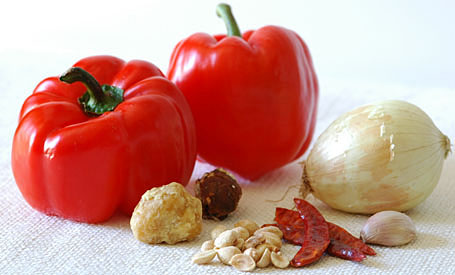
Red Bell Peppers, Onion, Garlic, Dried Red Chillies, Roasted Peanuts, Tamarind and Jaggery - Ingredients for Red Bell Pepper Chutney

Recipe:

Cut to big chunks:
2 big red bell peppers
1 medium sized onion
6-8 dried red chillies
2 garlic cloves

Roast:
Heat about 1 to 2 tablespoons of peanut oil in a skillet.
Add and roast the cut vegetables and dried red chillies on high heat. The vegetables should be very well browned and soft. Remove them from heat and allow to cool.

Meanwhile, Soak tamarind, and Roast Peanuts:
– Small Lime sized tamarind in half-cup of warm water for about 10 minutes. Or microwave for 30 seconds – This is to soften the tamarind, so it can grind well.
– Roast half-cup of peanuts until golden and remove skins. Store-bought un-salted, roasted peanuts are fine too.

Blend, in a blender or in a mortar using a pestle:
All the roasted vegetables
Tamarind, along with the water it soaked in.
Half cup of roasted peanuts
½ tablespoon of powdered jaggery
¼ tsp of salt or to taste
Grind them together to coarse puree, without adding any extra water.

Remove to a cup and serve with your favorite breakfast/lunch/supper items.

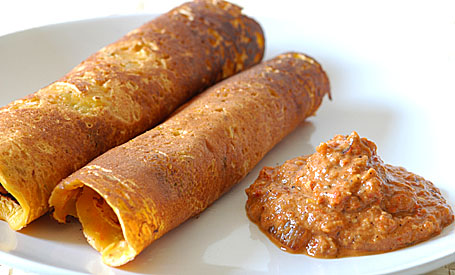
Red Bell Pepper Chutney and Besan Dosas
Besan Dosa and Red Bell Pepper Chutney

Recipe Source: My own creation

Posted by Indira©Copyrighted in Bell Pepper,Dried Red Chillies,Peanuts,Peppers (Tuesday June 20, 2006 at 9:21 am- permalink)
Comments (54)

The New Home of Mahanandi: www.themahanandi.org

Gram Flour Dosa (Besan Ka Cheela or Puda)

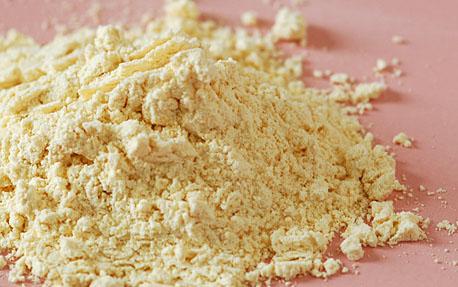
I like food items prepared with gram flour. Golden yellow colored flour not only tastes mildly sweet, it’s also gluten free and famously known for its anti-diabetic properties.

Other Bharatiya names for gram flour are – Besan (in Hindi), Sanaga Pindi (in Telugu) and Kadalai Maavu (in Tamil).

After bajjis and pakoras, my next favorite item with besan is dosas. Besan Dosa is a traditional Indian breakfast and evening snack item, prepared by mixing gram flour with a variety of finely chopped vegetables. The dosas are usually served with chutney and raita. They are quite easy to prepare and we can experiment with ingredient quantities quite liberally without any dire consequences.

Recipe:
For about 8 to 10 small size dosas

2 cups of gram flour (besan)
1 big onion, 6 green chillies, few sprigs of cilantro – finely chopped
1 big carrot – finely grated
1 tsp of each – cumin and ajwan (vaamu/carom seeds)
½ tsp of salt or to taste

Sift gram flour to aerate and to remove lumps. Take in a big vessel. First add cumin, ajwan, and salt. Mix to combine. Next, add the finely chopped vegetables. By gradually adding water, about 1 to 2 cups, mix and prepare besan batter to a medium-thick pouring consistency, like idly batter.

Heat an iron dosa pan and grease it with half-cut whole onion. When the pan is hot, pour ladleful of batter and spread into thin round. Sprinkle half teaspoon of oil or ghee on the top. Wait for bubbles to appear. When the underside starts to brown, gently lift and turn to other side. Cook the dosa until the second side is lightly browned. Remove and serve hot with chutney. (They are not that good when they get cold, so prepare them just before mealtime.)

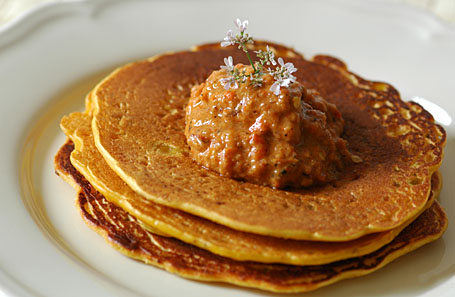
Besan Dosa with Red Bell Pepper Chutney
Besan Dosas, Red Bell Pepper Chutney with Coriander Flower Garnish ~ Our Simple Lunch Today

More About Besan Dosa:
Video blogging of Puda by Jay Dave and Sisters (entertaining)
Kay’s Besan Cheela
Italian Version-Socca from Tasty Bytes

Posted by Indira©Copyrighted in Gram Flour (Besan) (Monday June 19, 2006 at 3:32 pm- permalink)
Comments (29)

The New Home of Mahanandi: www.themahanandi.org

Gram Flour (Besan, Sanaga Pindi)

Besan, Gram Flour, Sanaga Pindi, Chana Dal Flour
Gram Flour (Besan, Sanaga Pindi) ~ For This Week’s Indian Kitchen

Gram Flour : Recipes

Posted by Indira©Copyrighted in Gram Flour (Besan),Indian Ingredients,Indian Kitchen (Sunday June 18, 2006 at 6:03 pm- permalink)
Comments (2)

The New Home of Mahanandi: www.themahanandi.org

Weekend This & That

Embroidery and Cross Stitch:

Few days ago, Shammi of Food in the Main has posted her completed piece of embroidery design. I felt happy to see her beautiful piece and I thought it would be wonderful to share some of my finished works.

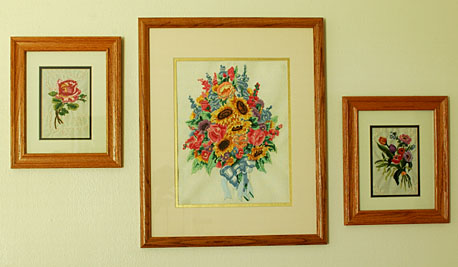
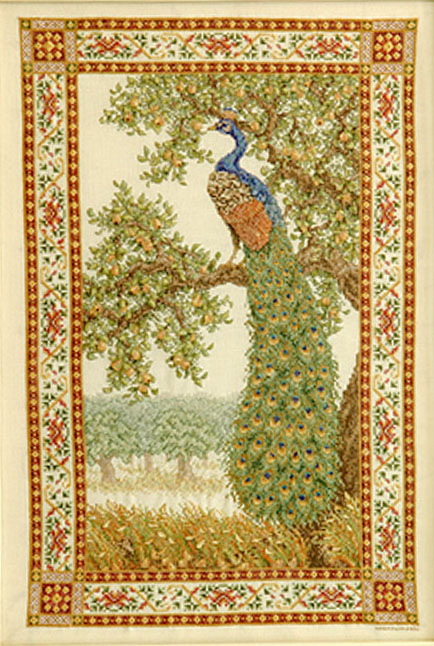
The pieces in the first photo are my first finished projects that I had done here in the US. Includes two small size needlework flower pieces, and one big embroidery flower bouquet piece. The photo below shows the embroidery design in close up.

The above cross-stitch work is really my all time favorite design. It is called Peacock Tapestry and designed by talented Teresa Wentzler. Some of her elaborate cross-stitch designs are work of art and she pays incredible amount of attention to details and colors as you can see. I have worked for about 4 months, non-stop on this piece. To this day, I still think all that effort was worth my time.

Posted by Indira©Copyrighted in Zen (Personal) (Saturday June 17, 2006 at 7:22 pm- permalink)
Comments (43)

The New Home of Mahanandi: www.themahanandi.org

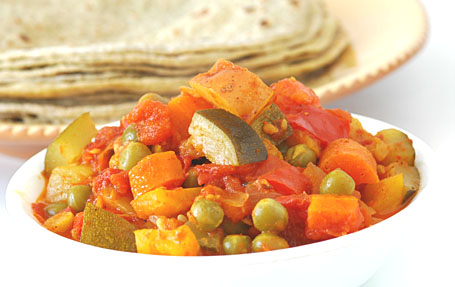
Zucchini Kurma

Zucchini Kurma
Zucchini Kurma

When we buy vegetables that are in season, they reward us with incredible fresh flavor. I guess, as if saying thanks for saving them from a fate of an artificial light enhanced, wax coated, every 30 minute sprinkler spray hell of 24-hour open, chain grocery shop environment.

Zucchini is one such vegetable. My first few times cooking this vegetable, the result was not good. The vegetable went all weepy with no taste or substance. I thought what a loser and why would anyone pay good money to buy this. Keep in mind that we don’t get this vegetable in India. After a year break, the next spring, I couldn’t resist giving them another try when I saw the farm fresh, tender skinned and no waxed zucchinis in an appealing shade of pale green. They rewarded me for buying them fresh. The curry with them tasted good, almost like ridge gourd, my favorite vegetable from India. I guess that’s why people often say moving to a new country is a learning experience. Everyday is a new day to find out something new about people, traditions and particularly about food.

We can get zucchini that is freshly picked for the day from neighborhood “Rulli Brothers” grocery shop. I like to cook them by baking & broiling for few minutes or as traditional Indian curry. This is one such recipe where zucchinis are cooked with other fresh vegetables like bell peppers, new crop potatoes, carrots and springtime tomatoes. A satisfying taste and filling side dish suitable to any time of the day.
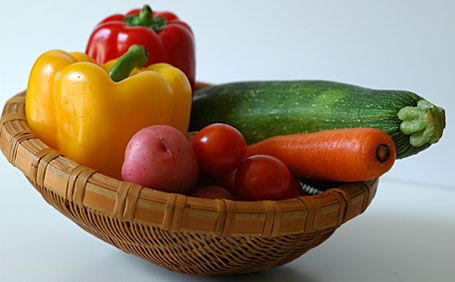
Zucchini, Carrot, Red and Yellow Bell Pepper, Baby Potatoes and Cherry Tomatoes

Recipe:

Cut and chop:
Fresh Zucchinis – 2, cut into big bite sized cubes
Bell Peppers – 2, cut into small pieces
Baby potatoes – 6 to 8, cut into cubes
Carrot – 1, cut into cubes
Tomatoes 6 to 8 or 1 pound cherry tomatoes – chopped
Onion – 1, chopped into small pieces

Heat in a large pan over medium heat:
1 tsp of peanut oil. To it add and toast
1 tsp of each – minced garlic, cumin, mustard seeds and few curry leaves (tadka)

Add and cook:
First onion, then tomatoes until they soften.
Next, 1 cup of overnight soaked dried green peas
Also all the chopped vegetables – Zucchini, bell peppers, potatoes and carrots
Add 1 cup of water and mix. Cover and simmer for about 10 to 15 minutes on medium heat.

Stir in:
1 tsp of each – red chilli powder, salt and turmeric or to taste
1 tsp of cumin-coriander-clove and cinnamon powder (CCCC)
1 tsp of amchur (dried mango) powder
Mix to combine. Simmer another 10 to 15 minutes, covered on medium heat, stirring in-between.

Serve warm with:
Chapatis or parathas.
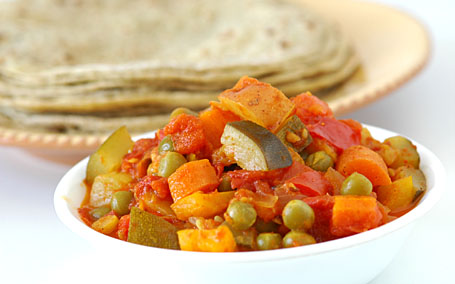
Zucchini Kurma with chapatis
Zucchini Kurma with Chapatis
Posted by Indira©Copyrighted in Zucchini (Friday June 16, 2006 at 4:17 pm- permalink)
Comments (22)

The New Home of Mahanandi: www.themahanandi.org

10 Things I Miss of Mom’s Cooking ~ MEME

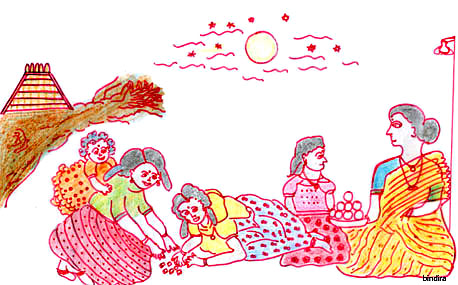
Mother and Daughters on a Warm Summer Full-Moon Night
Mother and Daughters on Rooftop Terrace, Enjoying Summer Full-Moon Night with Food and Play

10 Things I Miss most about my amma’s cooking:

Kind and generous
Selfless devotion
Calm assurance
Thoughtful persistence
Naive innocence
Simplicity
Innate strong desire to please others
And of course without saying goes
Stubbornly unyielding, overbearing and irritating

These are the things that I remember about my mom’s cooking. My relationship with my mother and her cooking is a typical mother-daughter food relationship. What it’s not is, all lovey-dovey all the time. Sometimes, I was a demanding daughter foodwise. Tantrums and outbursts from me when I was little were part of her life. Over the years, what I learned about her is she is just like me, a human being, not a superwoman with magical powers.
But I do absolutely worship what she represents, a lifestyle so different from mine and a culinary style so genuinely charming, that’s what I remember and miss the most about her cooking and have been trying to capture in my foodblog. Example is the image below.

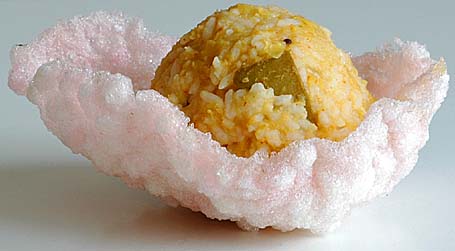
Mango dal and rice mudda in a sabudana papad
Pure Love and Affection ~ Amma Mudda (Mango Dal Mixed with Rice & Ghee)

Thanks Revathi for tagging me and to Garam Masala for thinking of this wonderful meme to honor the mother figure in our lives.

My tags: It would be a pleasure to read what Gattina, Evil Jonny and soon to be mom Kay say about their mom/mother figure. As Garam Masala mentioned in her meme, you could list recipe names, food traditions, or anything you’d miss about mom’s cooking. Thank you!

Posted by Indira©Copyrighted in Zen (Personal) (Thursday June 15, 2006 at 1:56 pm- permalink)
Comments (28)

The New Home of Mahanandi: www.themahanandi.org

« Next PagePrevious Page »